
How to Build a Best-Selling Coloring Book Series on Amazon KDP
Mar 01, 2026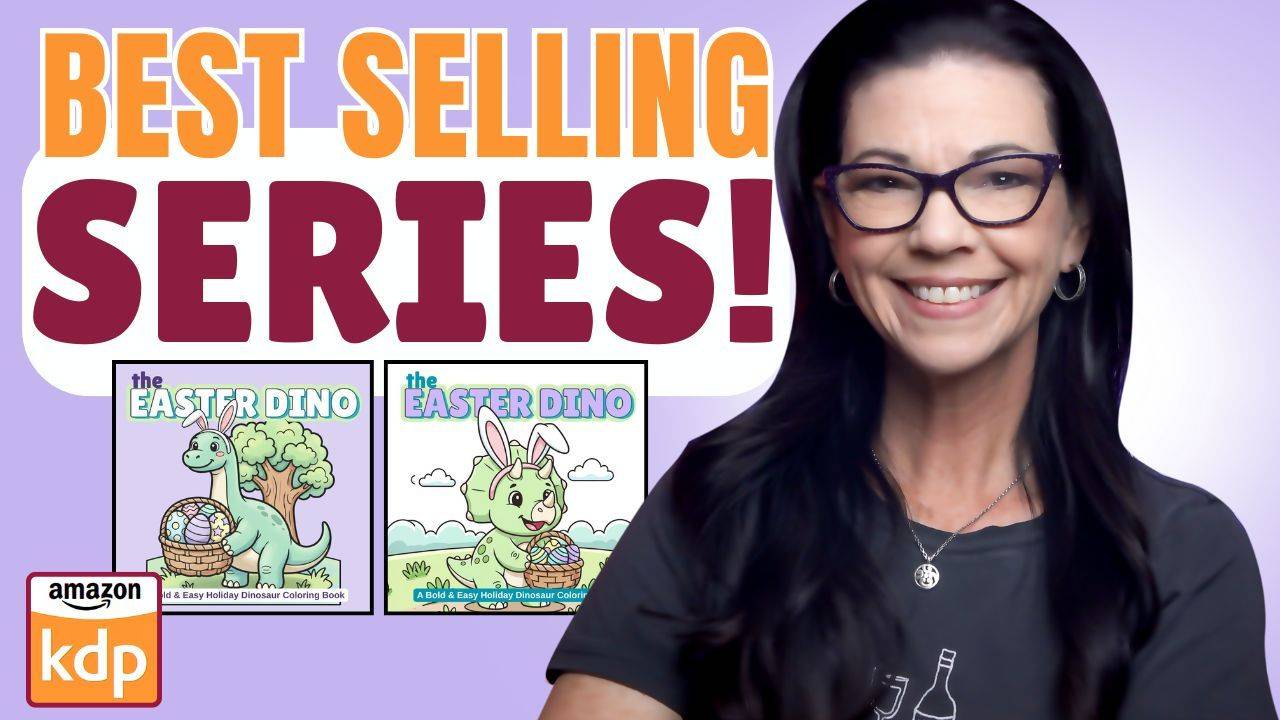
If you’re publishing one coloring book at a time and hoping one magically “takes off,” that’s the slow lane.
The real momentum on Amazon KDP does not usually come from one lucky title. It comes from creators who build a series.
A series builds brand recognition.
A series multiplies visibility.
A series turns one-time buyers into repeat customers.
And when you do it strategically instead of randomly, it creates consistent income instead of occasional sales spikes.
Let’s walk through how to do this intentionally.
Why One Book Isn’t Enough
If you’ve ever published a coloring book and thought, Okay… now what? you’re not alone.
Maybe it sold a few copies. Maybe it even did well for a week. But it never built real traction.
Here’s why.
When you only have one book:
-
You show up once in search results.
-
There’s no second option for the buyer.
-
There’s no easy “next purchase.”
With a series:
-
Instead of one book appearing in search, you have three, five, or ten.
-
If someone buys Volume 1 and loves it, Volume 2 is an effortless add-to-cart.
-
Amazon’s algorithm starts linking your books together.
That’s how you move from random sales to repeat buyers.
But let’s be clear: this does not mean pumping out random volumes. That strategy burned people out in 2024, including me. We’re doing this differently.
Step 1: Niche Down Before You Scale
Do not create “Animal Coloring Book.”
That’s too broad.
Instead, think:
-
Cute Farm Animals for Teens
-
Cozy Cottage Animals
-
Bold and Easy Forest Creatures
-
Sassy Motivational Animals
When you niche down, three things happen:
-
Your cover becomes clearer.
-
Your keywords become stronger.
-
Your audience becomes obvious.
And when Amazon understands exactly who your book is for, it matches your book to search intent better.
Specific beats general every time.
Real Example: Researching a Series Opportunity
One of my books recently sold about 20 copies in a week. For some people, that may not sound huge. But for a book that was only about a month old, that’s strong traction.
So I asked:
Where could this go next?
I searched “My First Coloring Book” on Amazon.
The results were around 3,000 listings. That’s a healthy range. Not 30,000. Not so crowded you disappear.
As I scrolled, I noticed something important:
-
Same main title structure.
-
Slight variation in theme.
-
Consistent cover style.
-
Strong brand cohesion.
Then I saw a powerful example:
“My First Big Book of…”
-
Trucks
-
Dinosaurs
-
Unicorns
-
Farm Animals
Same structure. One variable changed.
That’s a series.
And here’s the part that matters: when someone buys one, Amazon suggests the others. Parents already trust the quality. That makes the next sale easier.
Using my KDP research plugin, I checked estimated revenue:
-
One title: ~$17,000/month (gross)
-
Another: ~$15,000/month
-
A smaller one in the same series: ~$2,200/month
Even if those are rough revenue estimates, the pattern is obvious. The series model works.
Why I Pivoted to a Holiday Dino Series
I originally considered jumping into a “My First Coloring Book” style series.
But I changed direction.
My book “My Dino Valentine” sold about 25 copies in just a few days around Valentine’s Day.
That spike told me something important:
Seasonal + niche + consistent style = opportunity.
Instead of building a massive 100-image book every time, I shifted to:
-
30 bold and easy coloring pages
-
Holiday-themed dinosaur books
-
Faster production cycle
-
Clear seasonal positioning
From there, I created:
-
The Easter Dino
-
Future plans: more holiday dinos
Now the brand becomes:
Holiday Dinosaur Series
Consistent character
Consistent style
Different seasonal angles
That’s strategic scaling.
Creating the Interior Efficiently
Time matters.
I have a full-time job. I have kids. I don’t have endless production hours.
For interiors, I use an AI bulk coloring page generator to produce 40 images, then select the best 30.
Why generate more than I need?
Because selection improves quality.
Some images won’t fit the theme perfectly. Delete them. Keep only the strongest.
For formatting:
-
8.5 x 8.5 trim size
-
30 images = 60+ pages
-
Add blank pages between images
-
Export as high-quality PDF
-
Use bleed if images go to the edge
This keeps production streamlined without sacrificing quality.
Designing Series Covers That Convert
Series covers should feel related at a glance.
For my Holiday Dino series:
-
Same bold font style
-
Same character feel
-
Similar layout
-
Coordinated color palettes
-
Clear subtitle
I initially skipped the subtitle. Big mistake.
Without it, the book looked less descriptive on Amazon. Once I added a clear subtitle, the thumbnail became stronger.
Always test your cover at thumbnail size. If you can’t read it small, neither can your buyers.
How to Set Up a Series in KDP
Inside KDP:
-
Go to your book.
-
Select “Add to Series.”
-
Create a new series or select an existing one.
-
Use “Main Content” (not related content) for same-type books.
-
Maintain consistent descriptions across the series.
When customers view your book, they’ll see:
“In this series (3 books)”
or
“(10 books)”
They click.
They browse.
They buy more.
That’s brand stacking.
Categories and Keywords Matter
Coloring books are categorized as activity books, not low-content.
Choose categories like:
-
Crafts & Hobbies
-
Activity Books
-
Children’s Coloring Books
For keywords, don’t just ask AI:
“Give me seven keywords.”
Instead say:
“You are an Amazon KDP SEO expert. Create seven high-ranking, long-tail keywords for a bold and easy dinosaur Easter coloring book.”
Perspective matters. Prompts matter.
Pricing Strategy
If books in the same series are priced at $7.95, keep them consistent.
Consistency builds buyer trust.
You can always lower price later. But start aligned with your brand.
Publishing Is Not the Final Step
Publishing is the midpoint.
Next step: reviews.
You need social proof. Buyers rarely purchase without reviews.
There are review platforms where you:
-
Review other books
-
Earn credits
-
Submit your own book
-
Receive honest reviews
They are not guaranteed five-star reviews. And that’s okay. Honest feedback improves your book.
No reviews = slow traction.
Reviews = credibility.
The Big Picture
A single book is a product.
A series is a brand.
When you:
-
Niche down clearly
-
Keep style consistent
-
Create slight variations
-
Connect books inside KDP
-
Maintain pricing consistency
-
Build reviews
You stop chasing one lucky win.
You start building momentum.
And momentum is what turns KDP into consistent income instead of a guessing game.
If you’re ready to build smarter instead of just publishing more, start thinking in series.
Your next book should never stand alone.